Atarashi Goes to Sicily — Messina
First edition — 6,500 people — Torre Faro, 2 August 2026
A first edition, a single date, a venue that had never hosted a festival: 6,500 people at Torre Faro on 2 August 2026. Brought in as an operations consultant, I finished the project as festival director — 220 staff, over half a million in managed budget, no significant medical or security incidents.
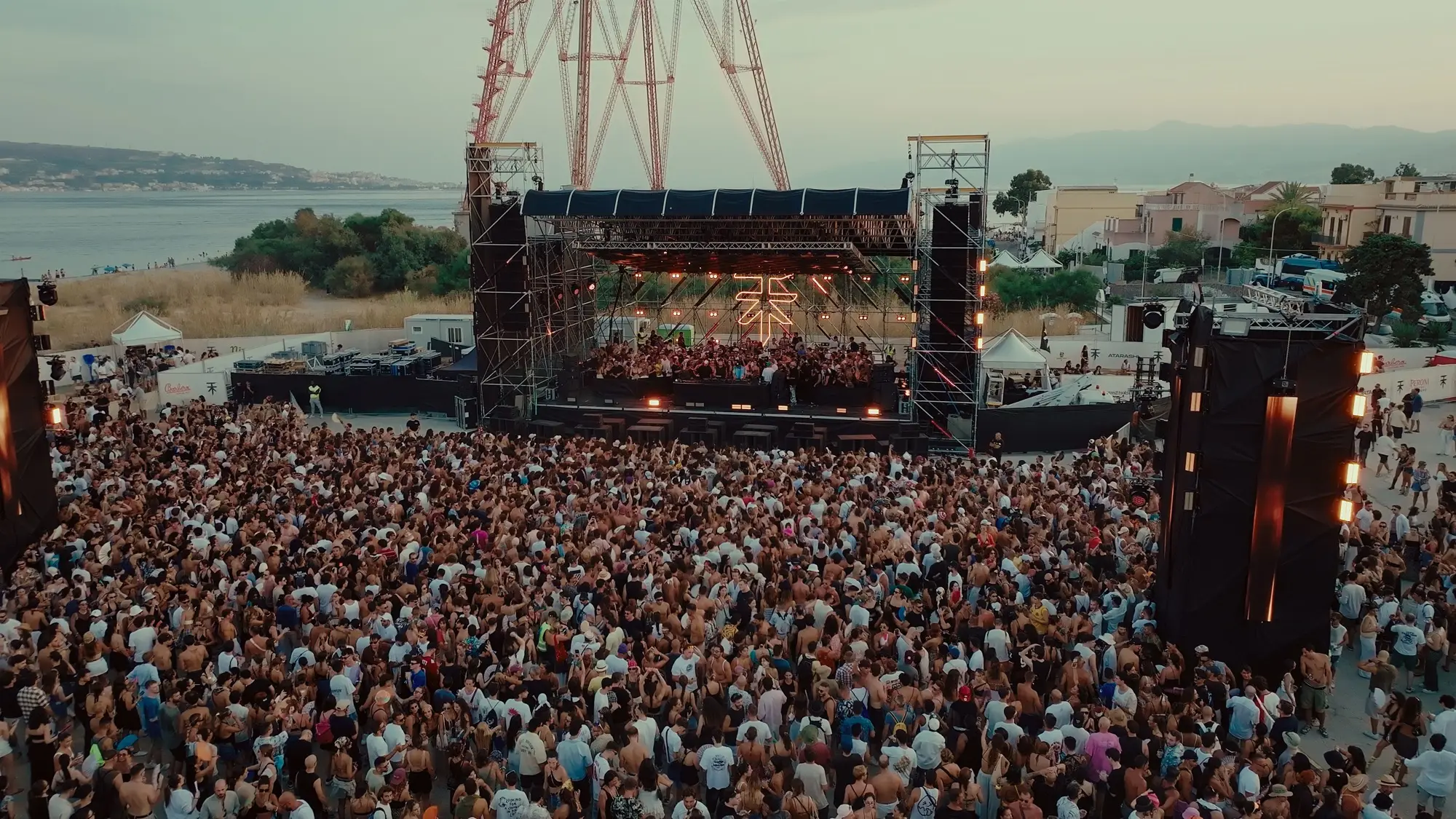
Foto: Francesco La Rosa
- ~6,500 attendance
- 0 significant medical or security incidents
- ~220 staff on site
- Over half a million in managed budget
- 11 entry lanes — 2,600–3,900 people/hour
- 3 main bars + 2 VIP — 6 food trucks
On 2 August 2026, at four in the afternoon, the gates opened on the first edition of Atarashi Goes to Sicily: an electronic music festival at Torre Faro, on the north-eastern tip of Sicily, at a venue that had never hosted an event of that size.
A first edition has one feature that changes everything: there is no previous year. No approved capacity, no supplier who already knows where the toilets go, no data on how many people arrive at six in the evening rather than nine. And there is no second night to put things right: whatever does not work shows up in front of thousands of people, all at once.
I was brought in as an operations consultant on crowd flow, safety, bars and payment systems. During the project the brief widened and, on the founders' mandate, became the direction of the festival.
The first job was not operational. It was putting the project into a shape that made it possible to see, month by month, what was missing.
A responsibility matrix across nine areas, with a single owner for every activity. It does one thing, and on a first edition that one thing matters: it surfaces the empty boxes while there is still time to fill them, instead of during build week.
A calendar built backwards from 2 August, in four phases. Foundations by early June, supplier contracts by the end of June, build, shifts and accreditation by mid-July, everything closed before the site opened. Working backwards from a fixed date changes the conversations: you stop arguing about whether something is urgent and start measuring how far it sits from 2 August.
And a single home for decisions: a weekly production call, a written recap after every call, an owner and a date next to every item.
We started from an idea and a group of friends. Andreas turned that idea into a plan with dates, responsibilities and documents. Without that step I don't think we would have got as far as opening the gates.
The venue was designed before it was built. I developed the site plan through eleven versions between June and late July, plus six detail drawings for bars, food, VIP pit and backstage. A venue plan is not an aesthetic document: it decides how far someone walks to reach a toilet, where an ambulance enters, how wide an emergency lane is, where the water points sit and how vehicles move in and out. At Capo Peloro, where traffic access is never a given, it was the document everything else rested on. In the same pass I checked the venue's electrical sizing: load per area and how the distribution would hold at peak.
The entrances were designed from a calculation, not from habit. Between scanning a ticket and fitting a wristband, each person takes ten to fifteen seconds: four to six people a minute per lane, or 240 to 360 an hour. With eleven lanes, entry capacity sits between 2,600 and 3,900 people an hour — enough to absorb the whole audience in an hour and a half to two and a half, which is the real window in which people arrive at a single-date event.
The rest of the access plan follows from that calculation. Add bag checks to the same line and the time per person rises, hourly capacity collapses and the queue stops clearing: which is why the pre-check was separated from ticket control and the switchbacks sized upstream. It costs extra staff, and it buys the one thing that cannot be bought at that point, which is time.
The bars were designed around one choice: cocktails on tap rather than mixed to order. A cocktail poured from a line is served in the time it takes to pour a beer; mixed to order, it is not. Across thousands of people concentrated into a few hours that difference is not convenience, it is service capacity: the cocktail positions held rates comparable to the beer ones. The choice paid off downstream too — no bottles behind the counter means less packaging to dispose of at the end of the night, simpler stock handling, and unsold product that stays in sealed kegs instead of becoming waste.
The same reasoning applies to water: two euros at the bar and a free water point. From four in the afternoon to half past midnight, outdoors, in Sicily in August, the price of water is not a revenue line. It is a variable in the medical plan.
Above five thousand people, in Italy, an event is not licensed at municipal level: it goes through the provincial commission for public entertainment venues. Capacity to be approved, safety plan, emergency and evacuation plan, fire wardens, medical post and ambulance, noise derogation, coordination with the police on how entry checks are carried out. That is the route that made the venue fit for use on the morning of 2 August.
The day began with the final inspection and the fitness-for-use sign-off, then the area managers' briefing: at that point the plan stops being a document and becomes a chain of command.
The gates opened in the afternoon and the audience arrived concentrated in the first hours, as it does at a single-date event. Entry flow stayed steady even at the peaks: the capacity calculated months earlier held up against the real thing.
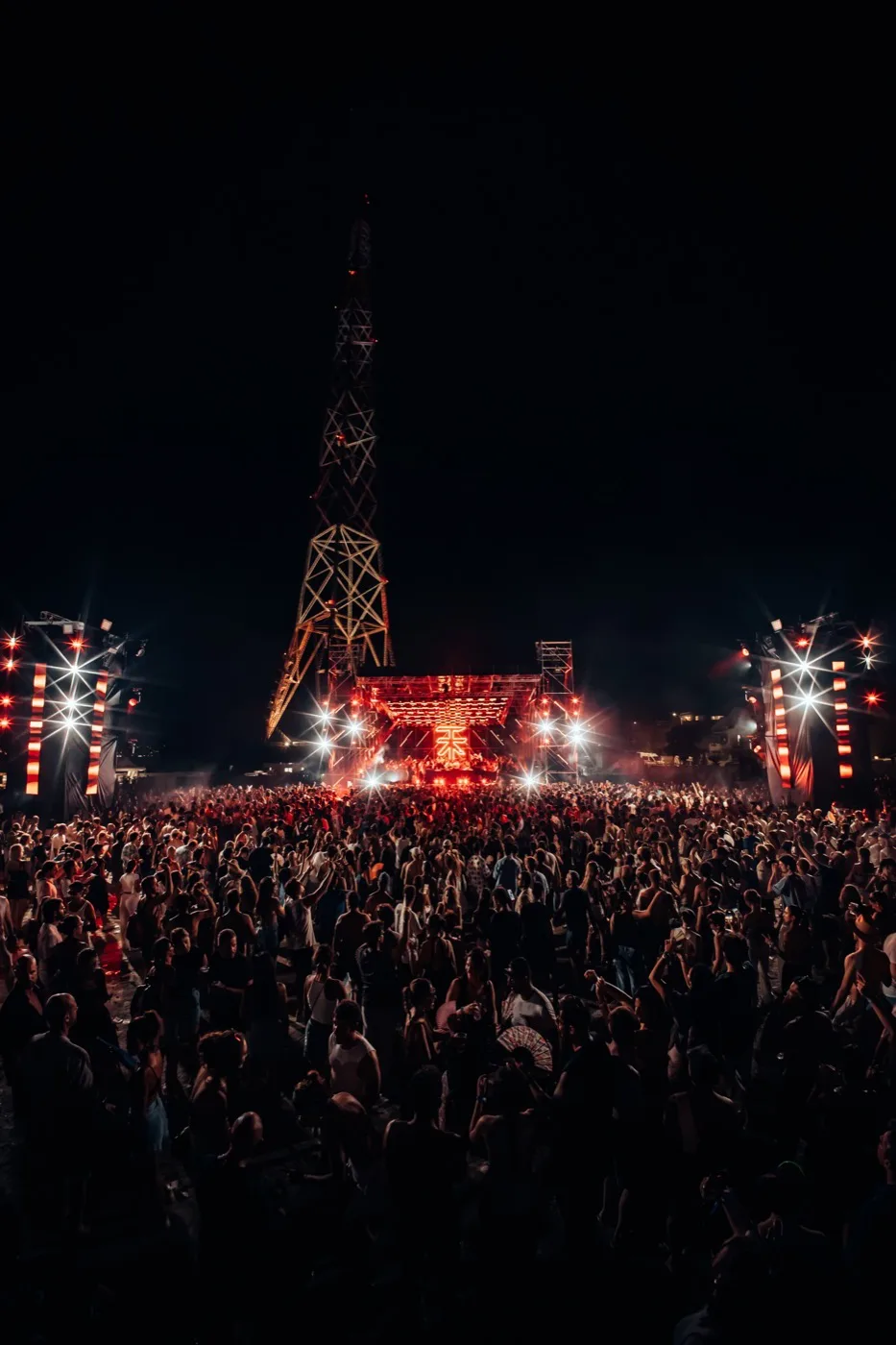
From opening to close, direction held the running of the night and incident command, with area managers on radio and around 220 staff on site. The event closed at half past midnight: roughly 6,500 people through the venue, no significant medical or security incidents, an orderly exit.
A successful event that leaves nothing behind forces the following year to start from scratch. The final part of the work existed to prevent that.
The licensing file and the approved capacity: the provincial commission process, the safety plan, the emergency plan, the medical plan. Documents validated at that venue, which do not have to be rebuilt from scratch.
A written operating model: the responsibility matrix, the phased calendar, the run of show and the production documents remain as a reusable framework. The second edition starts from a structure, not a blank page.
A data history. Adopting a cashless payment system was a strategic decision as much as an operational one: every purchase becomes a data point with a time and a position. An organisation running its first edition has none of this, and without data the following year's choices are made on impression. From here on, how many positions to open, where to put them and what to stock are decisions resting on a measured base — the first brick in a time series that, edition after edition, is worth more than any industry estimate.
And an operational debrief handed to the team, turning all of it into decisions for the next edition.
A first edition is judged on two things: whether it went well, and whether it leaves something to build the second one on.
What he left us is worth as much as the night itself: we have a way of working, documents and numbers of our own. The second edition doesn't start from zero.
01What does a festival director actually do?
They are answerable for the event happening, being licensed, and ending without harm. In practice that means holding together licensing and safety, venue design and build, entrances, staff and suppliers; on the day it means running the show and holding incident command. It is not an artistic role: programming stays with whoever curates the line-up.
02How do you calculate entry flow at the gates?
Start from the time it takes to admit one person. Between ticket check and wristband it runs ten to fifteen seconds — four to six people a minute per lane, 240 to 360 an hour. Multiply by the number of lanes and you get hourly capacity, which you compare against the real arrival window. If bag checks sit in the same line, time per person rises and capacity collapses, which is why it is worth separating them.
03How do you size the bars at a festival?
From service capacity, not from headcount on the floor. What matters most is how you serve: a product ready to pour goes out in the time of a beer, one mixed to order takes far longer, and that sets a ceiling no last-minute hiring can lift. So the service format has to be chosen before sizing the staff, not after.
04What permits does a festival of more than 5,000 people need in Italy?
Above 5,000 people the project goes to the provincial commission for public entertainment venues rather than the municipality. You need approved capacity, a safety plan, an emergency and evacuation plan, fire wardens, a medical plan with a medical post and ambulance, a noise derogation, and coordination with the police on how entry checks are run.
Working on something similar? Let's talk.
Start a conversation